
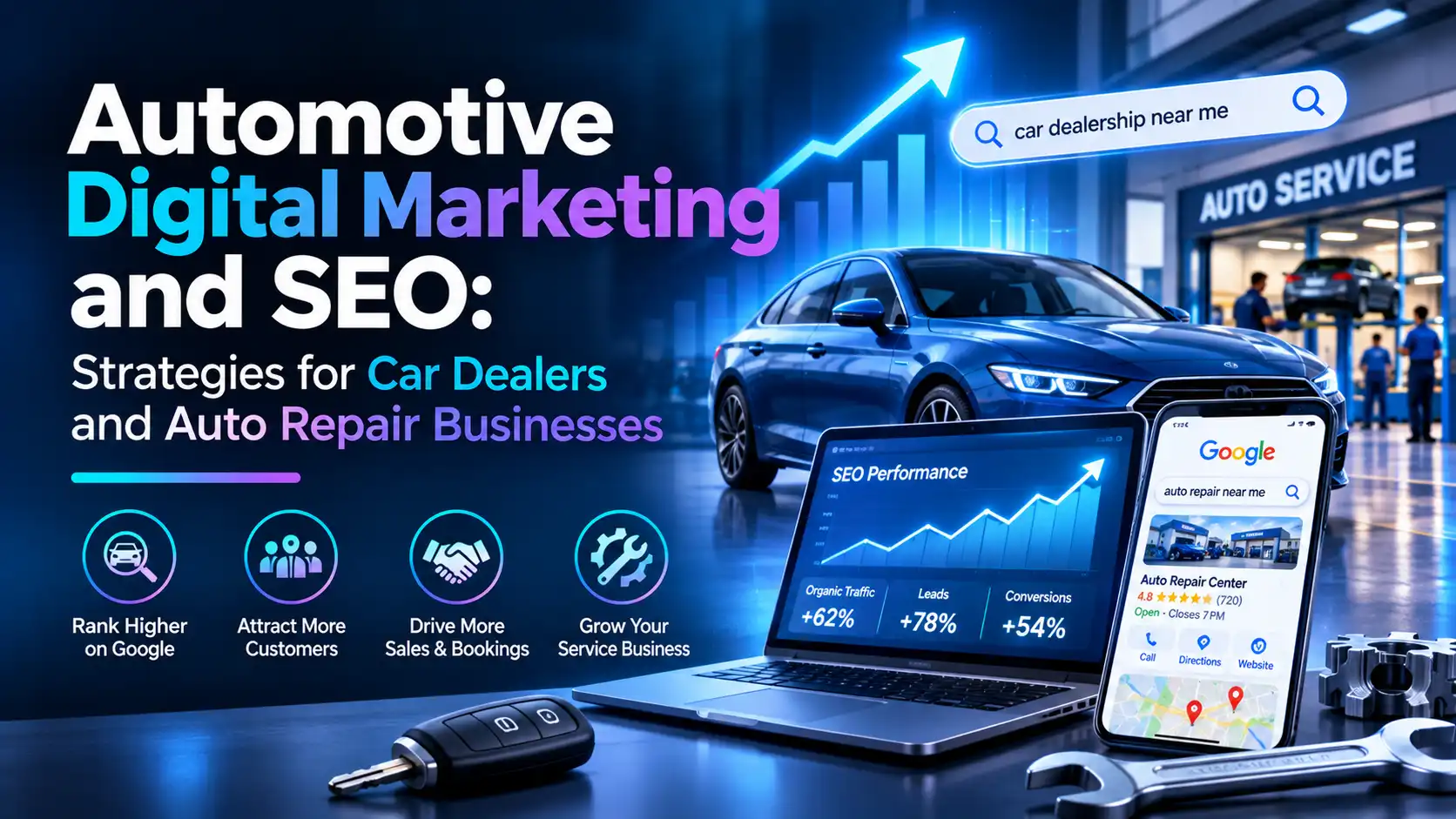
How Can Automotive Digital Marketing and SEO Help Car Dealers and Auto Repair Businesses Get More Customers?
The automotive industry has become increasingly competitive online. Customers researching a new vehicle, comparing used cars, or looking for a reliable repair shop often begin their journey with a search engine. Before visiting a dealership or booking a service appointment, they may compare prices, read reviews, explore vehicle specifications,s and evaluate local providers.
For automotive businesses, this creates an opportunity to reach potential customers through search engine optimisation (SEO) and digital marketing. A well-planned strategy can improve online visibility, attract relevant website visitors and generate enquiries from people who are actively considering a purchase or service. A strong automotive digital marketing strategy can support these goals through a combination of organic search, paid campaigns and website optimisation.
However, automotive marketing requires more than publishing vehicle listings or running occasional advertisements. Car dealerships and auto repair businesses need a consistent approach to website optimisation, local search, content marketing, paid campaigns and lead management.
This guide explores how automotive businesses can use digital marketing and SEO to strengthen their online presence and generate more qualified leads.
Why Digital Marketing Matters in the Automotive Industry
Customers often research automotive products and services before making a decision. Someone considering a vehicle purchase may compare several models, dealerships, and financing options. A vehicle owner looking for repairs may search for a particular service or compare nearby garages.
Digital marketing helps automotive businesses reach customers at different stages of this journey.
A structured automotive digital marketing strategy can help businesses:
- Improve visibility for vehicle and automotive service searches.
- Generate enquiries from potential buyers.
- Attract customers looking for repairs and maintenance.
- Promote vehicle inventory and specialist services.
- Build trust through reviews and useful content.
- Measure campaign performance and marketing return.
The strategy should reflect the business model. A car dealership needs to promote its inventory and sales process, while an auto repair business should focus on service availability, expertise,e and local customer acquisition. Targeted digital marketing for car dealers can help dealerships reach buyers, while specialist auto repair digital marketing can help repair businesses attract service enquiries.
Build a Search-Friendly Automotive Website
A business website is often the central part of its digital marketing activity. It should provide clear information about products, services, locations, and contact options. Investing in automotive website design can help create a website that presents vehicle information clearly and makes it easier for visitors to take the next step.
For car dealerships
Dealership websites should make it easy for potential buyers to explore available vehicles.
Useful website features include:
- Searchable new and used vehicle inventory.
- Detailed vehicle descriptions.
- High-quality photographs.
- Accurate pricing and availability information.
- Vehicle specifications and features.
- Finance and trade-in information where offered.
- Test-drive enquiry options.
- Clear dealership contact details.
Each vehicle listing should contain accurate, useful information rather than a short description copied from another website. Pages should also be updated when vehicles are sold or availability changes.
For auto repair businesses
Repair shop websites should organise services into clear categories.
These may include:
- General vehicle servicing.
- Brake inspections and repairs.
- Engine diagnostics.
- Tyre replacement.
- Battery services.
- Air conditioning repairs.
- Suspension and steering work.
- Vehicle inspections.
Individual service pages can explain what the work involves, common reasons customers request it, and how to arrange an appointment.
This helps visitors understand the business before making contact.
Use Automotive SEO to Attract Relevant Search Traffic
Automotive SEO involves improving website visibility for searches related to vehicles, dealerships, repair services,s and automotive products. A broader search engine optimization strategy can help automotive businesses improve the technical quality, content, and search visibility of their websites.
Keyword research should reflect the specific audience and services the business wants to attract.
Identify high-intent search terms.s
A dealership might target searches related to vehicle makes, models, used cars, and vehicle availability. An auto repair business may focus on service-specific searches and local repair queries.
For example, someone searching for a particular vehicle model may be researching a purchase, while someone searching for a brake repair service nearby may have an immediate maintenance requirement.
Organise keywords into relevant groups and assign them to appropriate pages. Avoid trying to make one page rank for every automotive-related search.
Optimise page titles and descriptions
Each important page should have a clear title and description that accurately represent its content.
A dealership’s used vehicle page should communicate the type of inventory available. An auto repair page should clearly identify the service being offered.
Write naturally for customers rather than repeating keywords excessively.
Improve internal linking
Connect related pages so visitors can explore the website easily. A vehicle listing might link to relevant finance information, while a repair service page could link to a booking page or related maintenance guide.
Internal links also help search engines understand the relationship between different sections of the website.
Strengthen Local SEO for Dealerships and Repair Shops
Many automotive searches have strong local intent. Customers often prefer a dealership or repair shop they can visit conveniently.
Local SEO helps businesses improve visibility for searches that include a city, suburb,b or phrases such as “near me”. Activities such as local promotion can also support local awareness and help businesses reach customers in their target areas.
Optimise Google Business Profile
Eligible automotive businesses should maintain an accurate Google Business Profile.
Important details include:
- Correct business name and address.
- Appropriate business categories.
- Accurate phone numbers and opening hours.
- Website and appointment links.
- Relevant service descriptions.
- Genuine business photographs.
- Updated holiday or temporary hours where applicable.
For businesses with multiple genuine branches, each eligible location should have accurate information. Do not create duplicate or misleading profiles to target additional suburbs.
Build useful location pages
Businesses serving several areas may benefit from location-specific pages when they can provide meaningful information about those locations. A considered SEO strategy for multi-location businesses can help organise these pages and make each location’s information relevant to its audience.
For example, businesses researching location-focused SEO approaches can explore resources for Mildura, Liverpool, Geelong, Central Coast, Bendigo, Mandurah, Bondi, Bankstown, Parramatta and Ryde.
A dealership page should identify the genuine branch and explain its available services. A repair business can describe the areas it serves and how customers can arrange vehicle servicing.
Avoid creating repetitive pages for locations where the business has no genuine presence or service connection.
Use Digital Marketing for Car Dealers
Digital marketing for car dealers can benefit from a combination of organic search, paid advertising, social media and lead generation campaigns.
Promote vehicle inventory through search.rch
Potential buyers often search for specific vehicle models, body styles, features or price ranges.
Dealerships should ensure that inventory pages are searchable, informative and regularly updated. Accurate specifications, pricing, and availability help customers make comparisons.
Where appropriate, vehicle inventory can also be supported by structured data and relevant integrations. Any implementation should follow the applicable platform documentation and accurately represent the visible information.
Use paid search campaigns strategically.
Paid search can help dealerships promote selected inventory, sales events and specific vehicle categories.
Campaigns should be organised around clear objectives, such as generating test-drive enquiries or attracting interest in a particular range of vehicles.
Use relevant landing pages rather than sending every advertisement to the homepage. Monitor enquiry quality, cost per lead and completed sales where reliable tracking is available.
Build relationships through social media
Social platforms can support vehicle discovery and brand awareness.
Dealerships can share genuine vehicle walkarounds, new inventory announcements, delivery experiences and educational content. Posts should provide accurate details and direct interested users to relevant website pages.
Social media activity should support the wider marketing strategy rather than operate as a substitute for a useful website.
Use Auto Repair Digital Marketing to Generate Service Bookings
Auto repair businesses have different marketing requirements from vehicle dealerships. Their primary objective is often to generate service bookings, repair enquiries and repeat customer relationships.
A practical auto repair digital marketing strategy should focus on visibility, trust and convenience.
Create service-specific campaigns
Promote important services such as brake repairs, diagnostics, routine maintenance and air conditioning work through relevant landing pages and advertising campaigns.
Each page should explain the service and provide a clear booking option.
Publish useful maintenance content.
Educational content can attract vehicle owners who are researching common problems or trying to understand maintenance requirements.
Potential topics include:
- Signs that a vehicle may need brake inspection.
- Why regular vehicle servicing matters.
- What causes a car battery to lose charge?
- When should tyres be inspected?
- What should drivers know about engine warning lights?
- How can vehicle owners prepare for a scheduled service?
Content should be accurate and reviewed by knowledgeable automotive professionals. Avoid presenting general information as a diagnosis of a specific vehicle problem.
Encourage repeat customers
Customer retention is an important part of automotive marketing.
With appropriate consent and privacy practices, businesses can use email communications to share service reminders, maintenance information, and relevant offers.
Clear customer records and responsible communication can support repeat bookings without overwhelming customers with unnecessary messages.
Build Trust With Reviews and Customer Experiences
Whether someone is purchasing a vehicle or choosing a repair shop, trust plays an important role.
Reviews can help potential customers assess the experiences of others. Encourage genuine customers to provide honest feedback after a completed sale or service.
Businesses should:
- Make it easy for customers to leave feedback.
- Respond professionally to reviews.
- Address complaints constructively.
- Avoid purchasing or fabricating reviews.
- Use genuine testimonials with permission.
- Keep business information accurate across relevant platforms.
Dealerships can also publish genuine customer experiences and vehicle delivery stories. Repair businesses may share examples of completed work, provided customer privacy and vehicle information are handled appropriately.
Improve Website Conversion and Lead Management
Generating traffic is not enough if enquiries are difficult to complete or follow up.
Automotive websites should provide clear next steps based on the visitor’s needs.
For dealerships, these may include:
- Requesting a test drive.
- Asking about vehicle availability.
- Requesting a finance discussion.
- Booking a showroom appointment.
- Enquiring about a trade-in.
For repair shops, options may include:
- Booking a service.
- Requesting a repair estimate.
- Asking about a specific vehicle issue.
- Calling the workshop.
- Checking opening hours.
Forms should be straightforward and request only the information needed to respond. Businesses should also establish a process for responding to enquiries promptly and tracking their progress.
A customer relationship management system can help teams manage leads, appointments,t s and follow-ups more consistently.
Measure Automotive Digital Marketing Performance
Marketing performance should be measured through business outcomes rather than website traffic alone.
Useful metrics include:
- Organic search traffic.
- Search impressions and clicks.
- Vehicle listing views.
- Test-drive enquiries.
- Repair booking requests.
- Phone calls and contact form submissions.
- Cost per lead from paid campaigns.
- Lead-to-sale or lead-to-booking conversion rates.
- Repeat customer activity.
Google Search Console can help identify organic search performance. Analytics platforms and advertising dashboards can provide additional insight when tracking is configured correctly.
Where possible, connect marketing data with dealership or workshop sales records. This helps businesses understand which channels generate valuable customers rather than simply attracting clicks.
When to Work With an Automotive Digital Marketing Agency
Some automotive businesses have the internal resources to manage their own marketing. Others may benefit from working with an agency that understands dealership websites, vehicle inventory, local SEO, and automotive lead generation.
An automotive online digital marketing company should be able to explain its approach, deliverables,s and reporting process clearly.
Before choosing a provider, consider:
- Experience with automotive businesses.
- Understanding of dealership or repair shop requirements.
- Technical SEO capabilities.
- Local search expertise.
- Paid advertising management experience.
- Lead tracking and reporting processes.
- Transparency around fees and campaign activity.
An agency should provide realistic expectations rather than guaranteeing specific rankings, sales volumes, or lead numbers.
Conclusion
Automotive digital marketing and SEO can help dealerships and auto repair businesses improve online visibility, reach relevant customers and generate more enquiries.
A strong strategy combines search-friendly website content, local SEO, useful automotive information, paid advertising where appropriate and effective lead management.
Dealerships should focus on accurate inventory information and vehicle enquiries, while repair businesses should prioritise service pages, local visibility and convenient booking options.
By measuring genuine business outcomes and consistently improving the customer experience, automotive businesses can build a more effective digital marketing strategy and strengthen their long-term online presence.